By Harkirat Batth
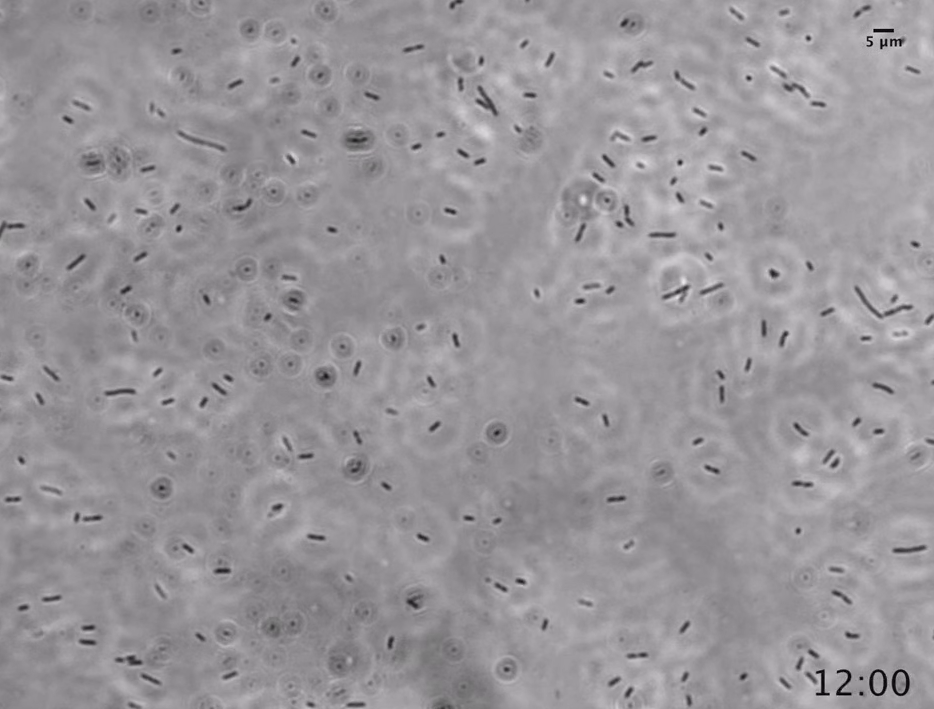
The discovery of penicillin transformed modern medicine, but decades of antibiotic use have led to the development of antibiotic resistance. In response, scientists have poured much time and effort into searching for alternative treatments. Dr. Hammack, Interim Facility Director of the Nanofabrication Facility at the Molecular Foundry, and the scientists at Locus Biosciences, have developed an innovative approach to target ESKAPE pathogens, the major types of bacteria that cause bacterial infections. By combining traditional techniques with modern liquid-handling robots, the team has been identifying which bacteriophages work best together in phage cocktails in order to treat bacterial infections. Their work was recently published in the journal Nature Communications.
Dr. Hammack explained, “In the early 1900s, during World War 2, the Red Army had a standard phage cocktail formulation for soldiers, and the development of bacteriophage therapies flourished in Eastern European countries. Now, we look back at this 100-year-old technology of using viruses to kill bacteria and think: ‘How do we modernize this solution?’ Well, by not only finding the bacteriophages that can treat an infection, but also doing a massive combinatorial screen of all of the different types of bacteriophages and then genotyping and sequencing all of the viruses, so that we can make an informed choice on how many bacteriophages to put into a cocktail.”
Using this technology, the team developed the LBP-EC01 phage cocktail. Such cocktails represent a huge step forward towards treating certain antibiotic-resistant bacterial infections. By combining multiple effective bacteriophages within a phage cocktail without compromising efficacy, the cocktail enables multiple viruses to attack a bacterial strain simultaneously. Because bacteria can survive independently of their hosts and viruses cannot, phage therapy offers a targeted approach to eliminating bacterial infections while preserving host cells—a characteristic that is uniquely effective.
Interested in Becoming a Foundry User?
Join our collaborative, multidisciplinary environment.
Learn more >
This new treatment approach has promising applications in hospitals. Dr. Hammack discussed one such application: “ Hospital networks work hard to prevent patient infections, but hospital environments have a lot of antibiotic and antiseptic use. Thus, there’s a chance that someone could develop an antibiotic resistant infection during their stay. If not treatable by small molecule pharmacology, it either has to be cleared naturally by the immune system, or patients need an alternative. That’s what bacteriophage therapies are designed to do: solve severe unmet health needs.” This therapy could be particularly valuable for vulnerable populations such as seniors and young children, who face greater risks from bacterial infections.
While developing a phage cocktail that works across a patient population is complex, the team’s high-throughput robotic platform has made it possible to systematically monitor interactions between bacteriophages and bacteria across phenotypic assays. In the researchers’ study, the 6 bacteriophages in phage cocktail LBP-EC017 were effective at treating 96.4% of in-vitro E-coli isolates tested. This reproducible method for creating bacteriophage therapies represents a significant advancement in the field. The technology is currently in its human clinical trials for treating urinary tract infections.

