The 2026 Molecular Foundry Annual User Meeting brought users, staff, and collaborators together on August 20th and 21st for two days of plenary talks, staff updates, awards, and breakout symposia spanning topics from critical metals recovery to photonic quantum technologies. The meeting opened with a welcome from the User Executive Committee (UEC), Foundry leadership, and the Department of Energy’s Office of Basic Energy Sciences, and closed with a full slate of Friday symposia and workshops covering the breadth of science happening across the facility’s user community.
The plenary sessions opened with welcoming remarks from Berkeley Lab Director Kathy Yelick, who emphasized the power of team science and the fundamental strength of community investments. An update by Mikhail Zhernenkov from DOE’s Office of Basic Energy Science highlighted ongoing user facility investments, funding trends, and key national priorities, including the outcomes of the NSRC Major Items of Equipment (MIE) recapitalization project. At the Foundry, the MIE brought an autonomous synthesis cluster for hard materials, a high-throughput STEM for hard materials, and a multimodal optoelectronic aberration-corrected STEM.


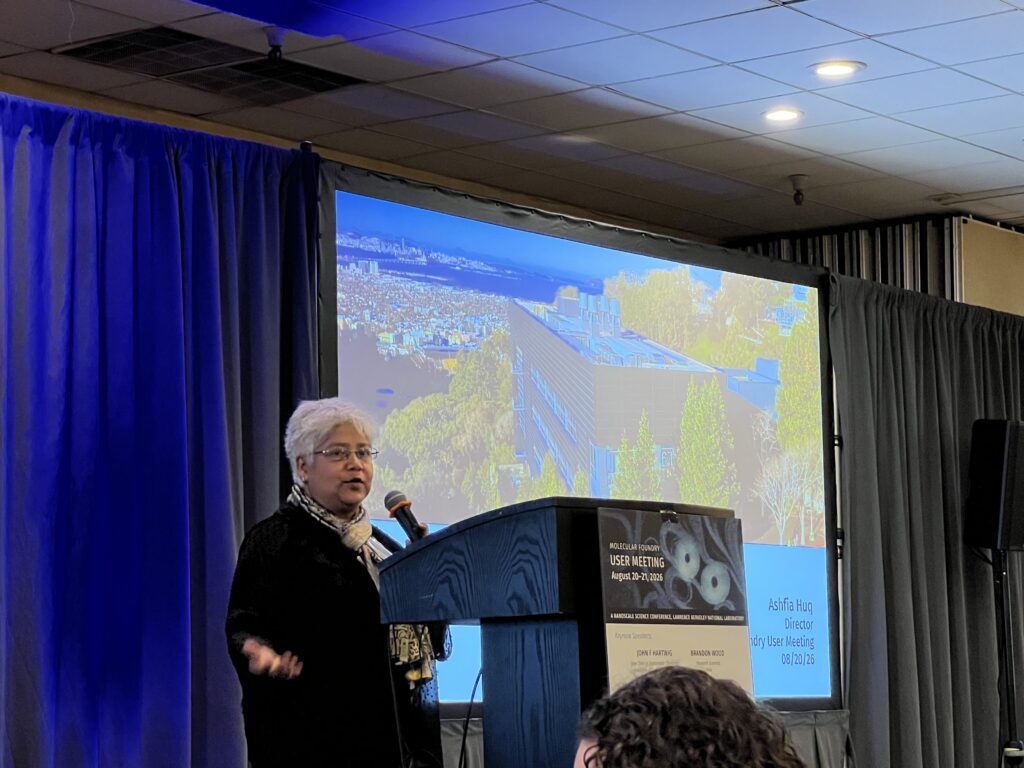
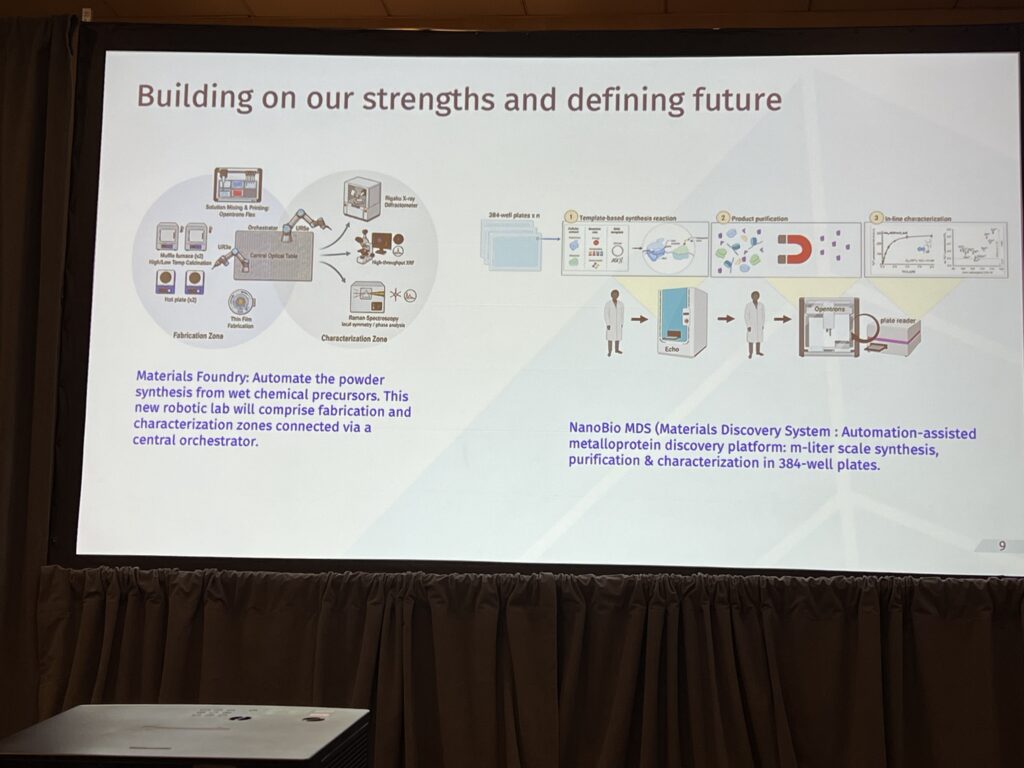
Foundry Director Ashfia Huq followed with a facility update, beginning with the fact that we served 1,135 users last year, a new record. The update also included a look at the Foundry’s refreshed strategic plan reflecting national priorities, an overview of new research themes, and a look at future investments aimed at replacing aging equipment and building new capabilities to match the facility’s scientific strategy and the needs of its user community. Building on the Foundry’s long expertise in robotics and automation, staff announced plans to stand up two new autonomous laboratories: the Materials Foundry, which will automate powder synthesis from wet chemical precursors as a complement to the Materials Sciences Division’s solid-state-focused A-Lab, and NanoBio MDS, an automation-assisted platform for metalloprotein discovery. Additionally, the joint proposal call with the Joint Genome Institute (JGI) from earlier this year will let users draw on both facilities to explore how biology can be used to separate materials.




Other highlights included Cryo-EPIC, the Cryogenic Ptychography and Imaging Center, which will bring three new cryo-instruments (a CryoTEM, CryoSTEM, and CryoFIB) online, and a growing portfolio of AI/ML efforts applied to nanoscale science. These include an AI agent for 4D-STEM that pipelines raw data through to web-based analysis for extreme data streams; a project accelerating hybrid thin-film synthesis and characterization in collaboration with the ALS and CXRO; and work toward closed-loop discovery for optimizing deposition in the Foundry’s cluster tools to accelerate quantum and microelectronic materials discovery.
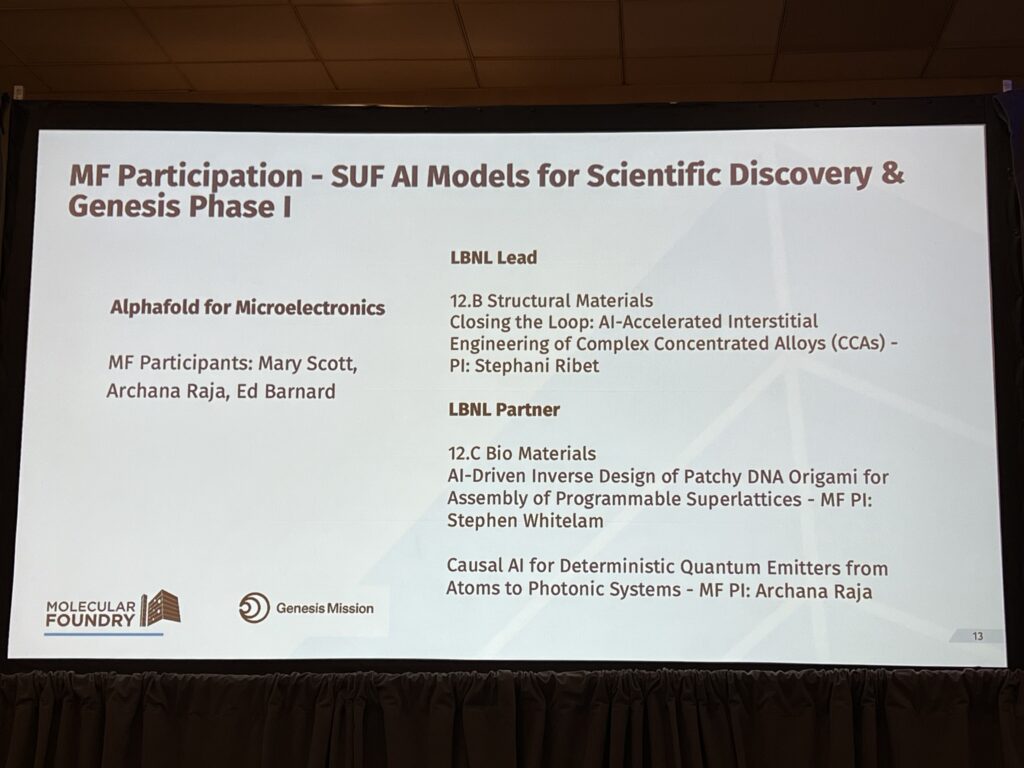
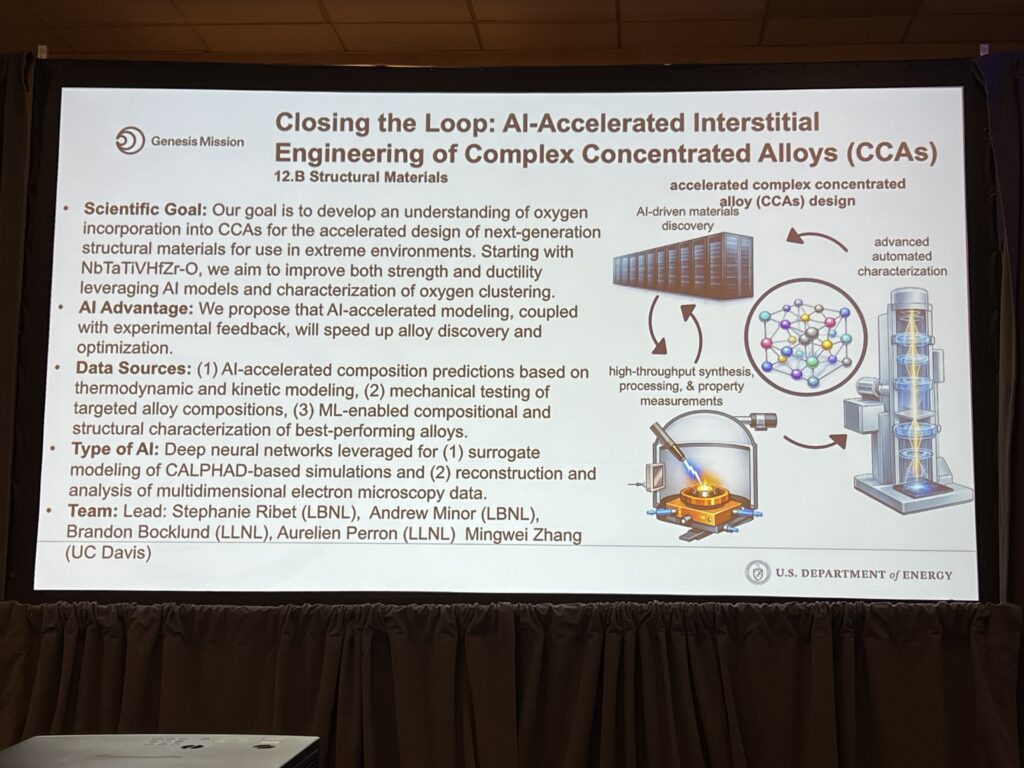
The update also spotlighted DOE’s GENESIS mission, where a project led by the Foundry’s Stephanie Ribet will use AI to accelerate the engineering of complex metal alloys, along with a few projects where Foundry staff will partner with other institutions. The update concluded with several staffing changes, including two departures and four new hires.
Keynote: Scaling Quantum Accuracy from DFT to MLIPs
The morning keynote came from Brandon Wood of Meta’s FAIR Chemistry team, who works on designing and discovering materials and molecules for applications ranging from climate change and renewable energy to AR glasses. Wood’s talk centered on the Open Catalyst Project, which calculates adsorption energies across a huge design space, work traditionally done with Density Functional Theory (DFT), which is accurate but slow. His team instead trains graph neural networks that run roughly 10,000 times faster than DFT, built on a series of increasingly ambitious datasets: the original 2020 Open Catalyst dataset (1.3 million DFT relaxations and 130 million training examples, requiring 200 million CPU-hours across 50,000 servers), a 2023 dataset covering MOFs, 2024’s Open Materials set of 100 million examples, and 2025’s Open Molecules dataset of 140 million examples spanning electrolytes, biomolecules, metal complexes, and small molecules.

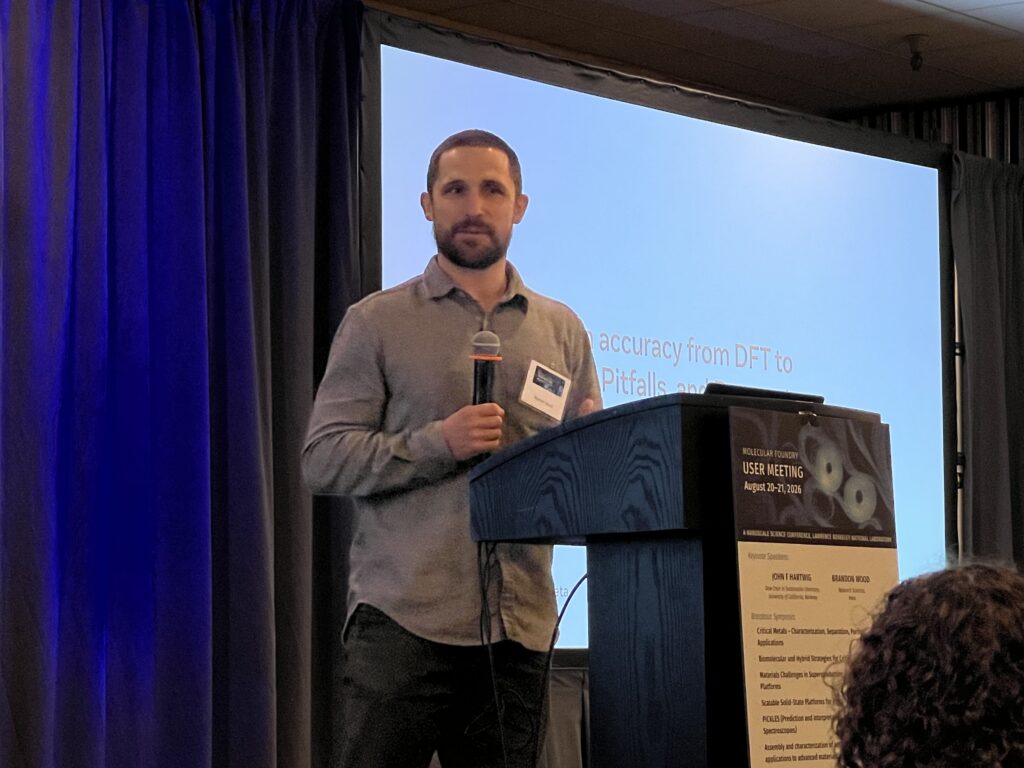
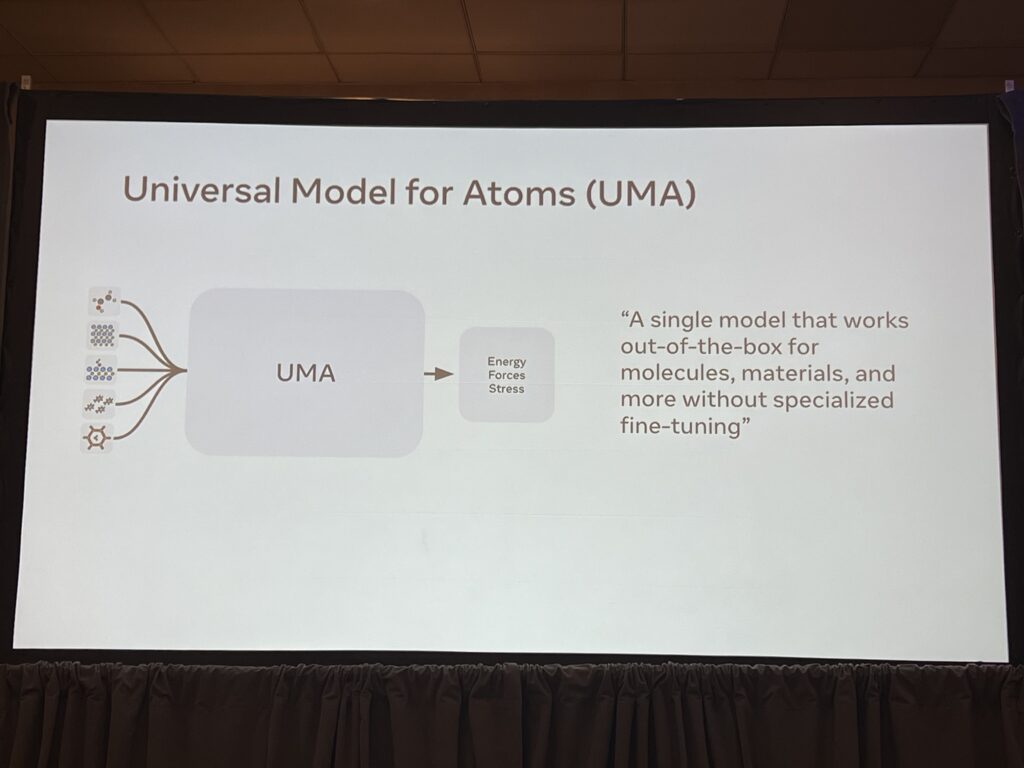
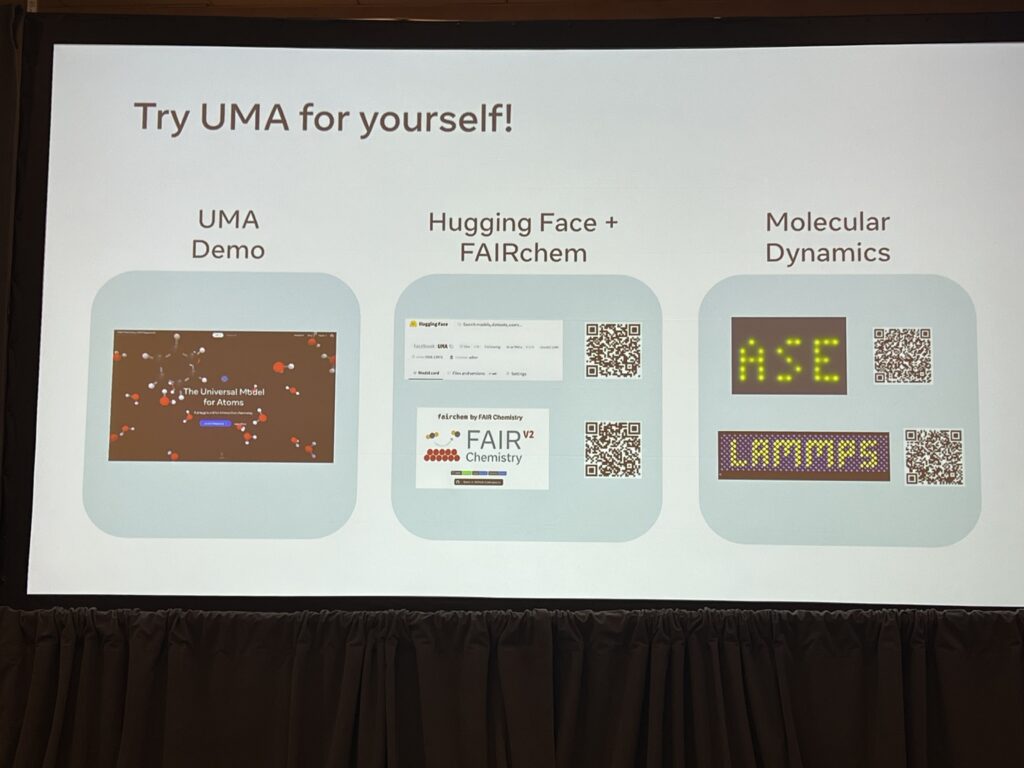
Pooling all of these datasets together (nearly 30 billion atoms and 500 million structures) raises an intriguing question for a field that is almost always data-starved: can a single model be trained that benefits every application? Wood described the resulting Universal Model for Atoms (UMA), a single model that works out of the box for molecules, materials, and more without specialized fine-tuning, and that can capture how chemistry changes with charge and spin. He was candid about UMA’s current limitations: global charge and spin, long-range interactions, robustness, and speed remain open challenges, and he framed the field’s progress in terms of shifting bottlenecks: models were the limiting factor around 2000, data became the bottleneck around 2020, and by 2026 the bottleneck has shifted to evaluation. For models that aren’t physically constrained by construction, the community needs robust, shared evaluations to know where models are succeeding, where outliers remain poorly understood, and how to compare against experiments when there’s no clean computational ground truth to check against, since a model can never outperform the level of DFT theory it was trained on. Wood pointed to distilling large models down to smaller ones as one promising path forward, and closed with a live demonstration of UMA as an interactive playground for chemistry.

User Highlights
Three user highlight talks rounded out the morning. Boubacar Kante of UC Berkeley spoke on scalable, classical, and quantum semiconductor light sources, describing how conventional lasers are fundamentally limited by the mirror-confinement geometry that keeps them from scaling. His group’s 2022 discovery of scale-invariant lasers led to the Berkeley Surface-Emitting Laser (BerkSEL), whose cavities were fabricated at the Foundry, and more recently to a new scheme for electrically injected semiconductor lasers that offers a compact platform for surface emission, work Kante noted would not have been possible without the Foundry.

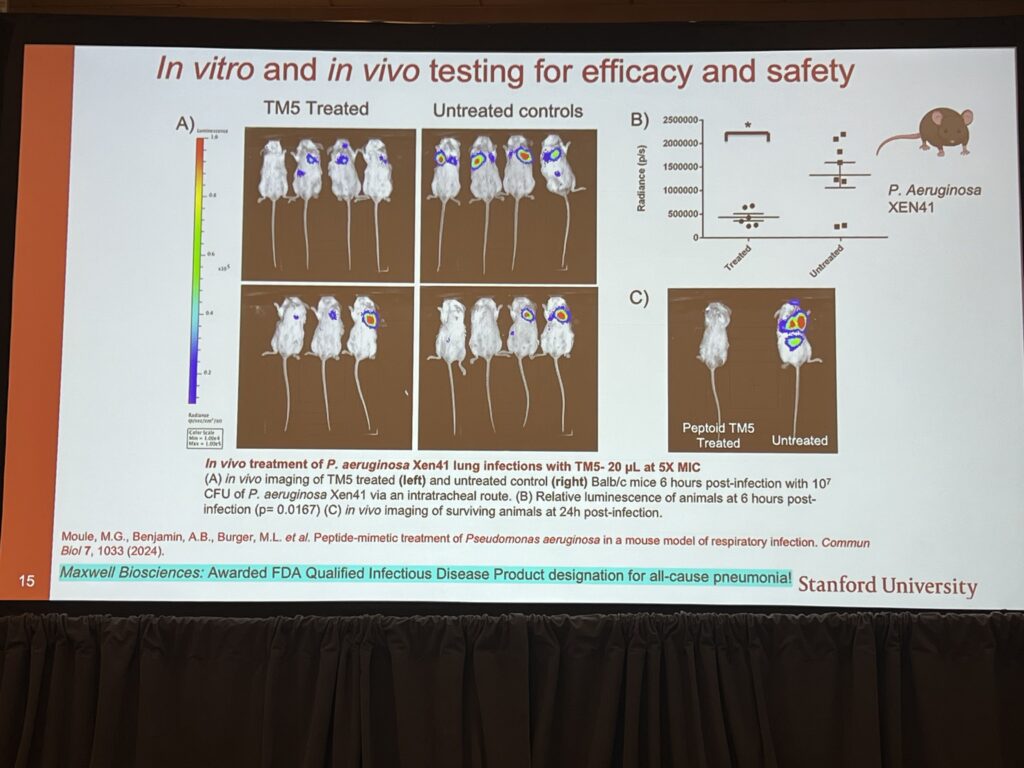
Annelise Barron of Stanford discussed antimicrobial peptoids designed as structural and functional mimics of LL-37, the human body’s single cathelicidin host-defense peptide, which is broad-spectrum antiviral, antibacterial, antifungal, and antibiofilm but large, expensive, and, when dysregulated, implicated in autoimmune disease. Using single-bacterial-cell, time-resolved fluorescence microscopy, Barron’s team showed that peptoids such as TM1 pass through bacterial membranes and rigidify DNA and ribosomes even faster than LL-37 itself, with the selectivity for pathogens over mammalian cells rooted in the fact that bacterial ribosomes float free in the cytoplasm rather than being sequestered as they are in mammalian cells. The most active peptoids adopt an ellipsoidal micelle structure, work done through physics studies at the Foundry.

Seung Sae Hong of UC Davis presented on freestanding oxide membranes and their heterostructures, tracing the field’s progression from graphene-style monolayers to multilayer 2D van der Waals materials and now to 2D layers carved from bulk 3D materials that lack van der Waals bonding altogether. Complex oxide membranes released from their growth substrates offer routes to energy-efficient electronics and neuromorphic devices, but understanding them has been limited by a lack of atomic-scale insight into epitaxial thin films. Hong showed how combining freestanding membranes with 4D-STEM is moving the field toward operando characterization of these devices.

Afternoon Keynote and Awards
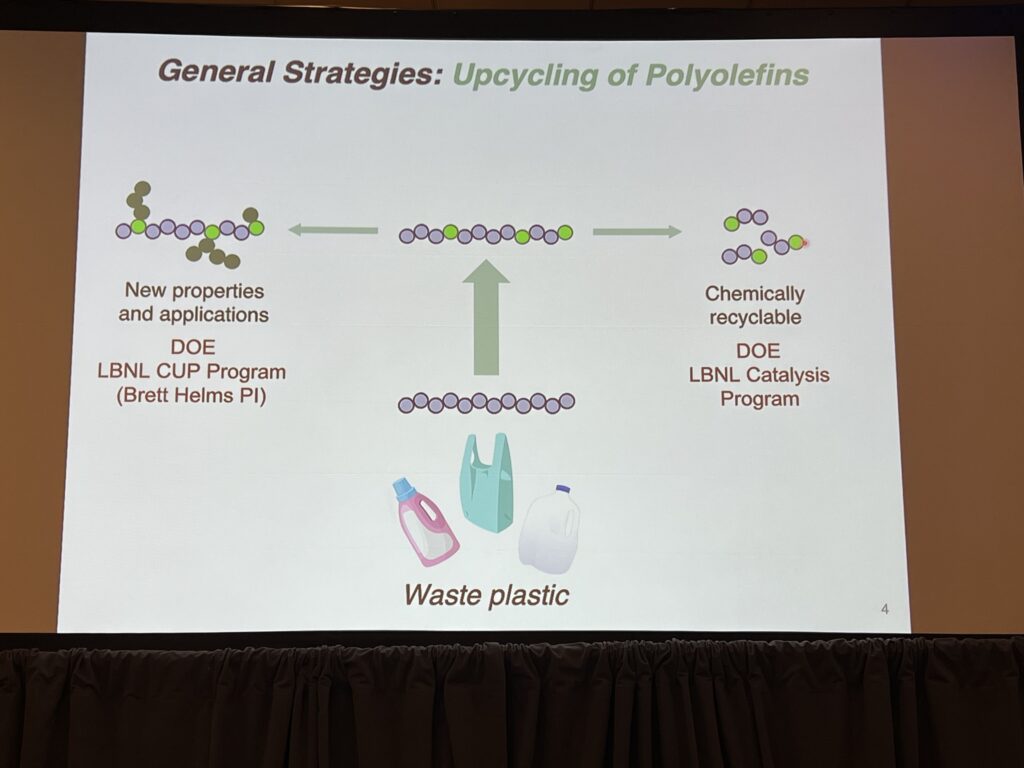
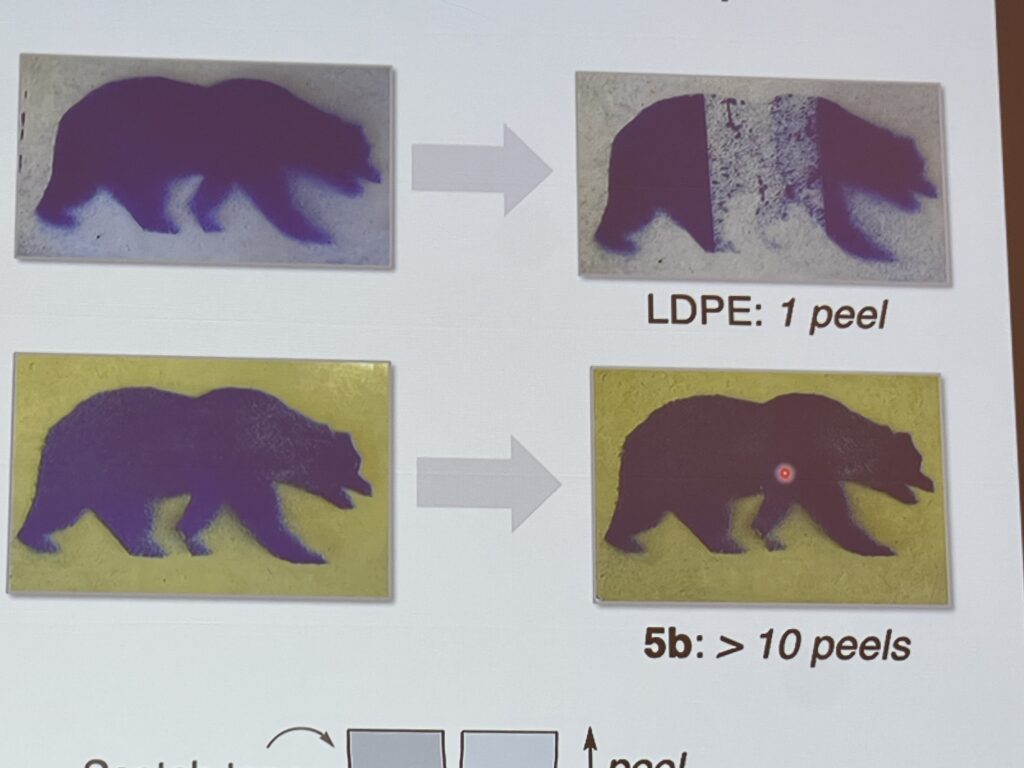
The afternoon keynote came from John Hartwig of UC Berkeley, who described his group’s work on the selective, catalytic functionalization of polyolefin surfaces and chain ends. The goal is to upcycle waste plastics into new plastics with new properties, or to chemically recycle them into catalysts or other useful molecules, for example, oxidizing the surface of a plastic bag so that it can be painted without the paint flaking off. Hartwig’s team is testing whether they can functionalize just the surface of solid polyethylene, comparing surface versus bulk oxidation and how each changes the material’s tensile properties, with the goal of preserving crystallinity and mechanical strength while altering gas permeability and paintability, properties that today require unrecyclable multi-layer materials to achieve.


The day’s awards recognized Stephanie Porter of Washington State University with the Travel Grant Award and Meredith Goudreau with the Staff Service Award.
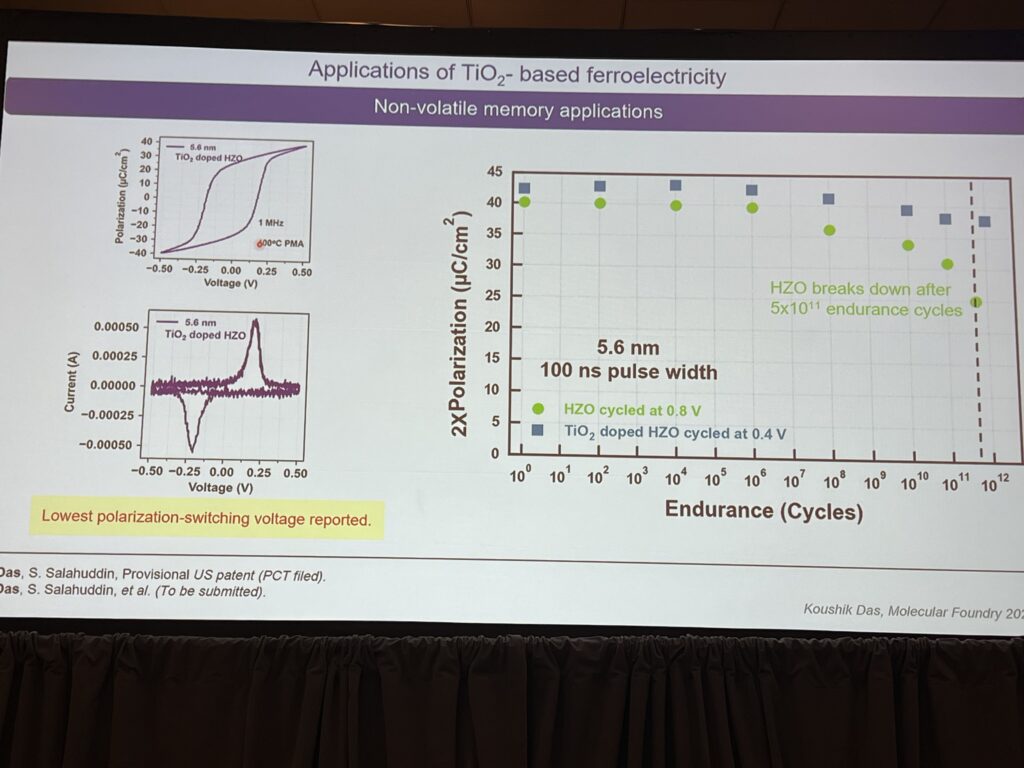
Feng Pan of Stanford won the Postdoc Paper Award for work on high-Q-factor chiral metasurfaces that enable twist control of electrons and photons, engineering chiral quasi-bound states in the continuum in Si-MoSe2 and AlGaAs platforms to achieve record room-temperature circular polarization and photon-pair generation rates four orders of magnitude above conventional nanoantennas. Koushik Das of UC Berkeley won the Student Paper Award for his talk on atomic-scale binary oxide films for energy-efficient and energy-autonomous computing chips, demonstrating how foundry-compatible binary oxides can stabilize negative capacitance for energy-efficient transistors, enable low-power non-volatile memory, and support on-chip energy storage many times faster than commercial Li-ion microbatteries.

New Capabilities at the Foundry
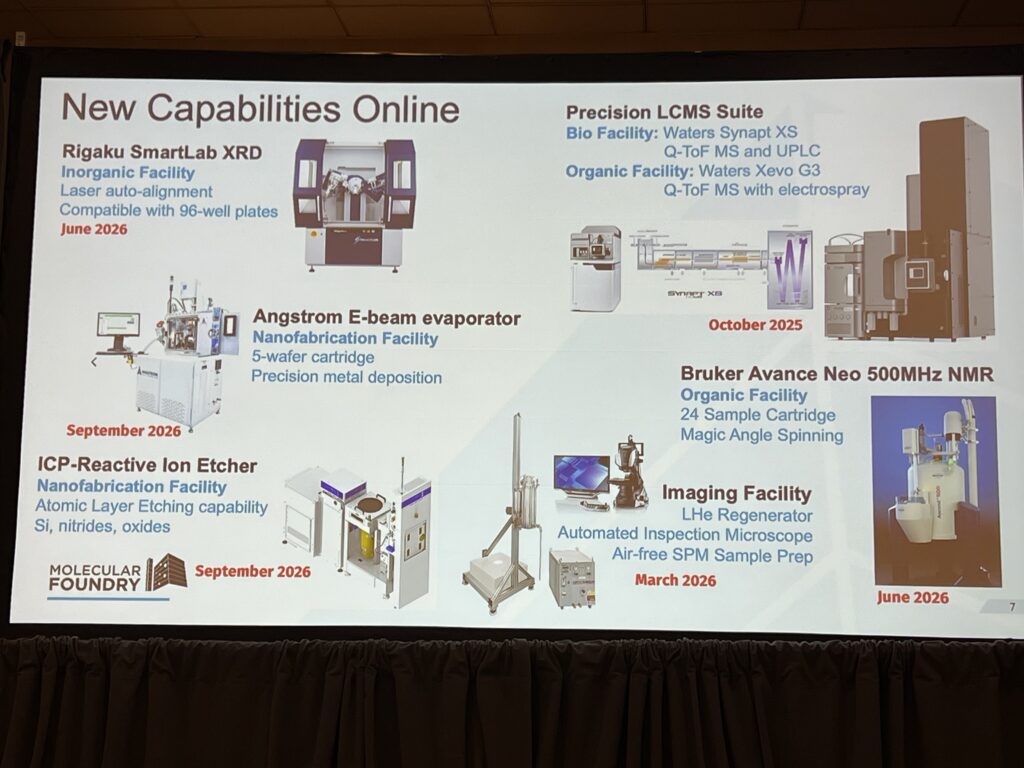
A dedicated session introduced several new instruments and platforms across the facility. Yashwanth Balaji outlined new capabilities in the Nanofabrication Facility, which spans materials growth, characterization, device fabrication, device characterization, and design. New tools now available include an ICP plasma etcher and a reactive ion etcher, both for fluorine chemistries, an e-beam evaporator, a focused ion beam, and a mapping ellipsometer, with two ALD systems bound for the quantum cluster tool, a Maybell dilution refrigerator, a high-performance FE-SEM, and a maskless photolithography system all on the way.
Liana Klivansky introduced a new NMR in the Organic Facility: a Bruker Avance Neo 500 MHz system, replacing a Bruker Avance II that had been in service since 2006, with a new magnet, console, 24-position sample changer, and solid-state probe. The system supports both manual TopSpin operation and automated walk-up use through Spin Pilot software, with remote instrument access planned for the future.
Morgan Wall introduced two new members of the Foundry’s Data and Automation team, Tim Kodalle and postdoc Fabrice Roncoroni, and walked through ongoing work to make Foundry data AI-ready. That includes a new web-based data explorer, sample tracking built into the Crucible data platform with the ability to catalog samples and relationships between them, a Python client, and an Android app that lets users scan QR codes to browse or display data live at a conference. New barcoding tools and user interfaces are in development to support end-to-end workflows, alongside Crucible Labs, a new tool bridging data science workflows and the Crucible platform, and ongoing efforts to integrate Crucible with agentic AI platforms. Users can learn more at crucible.lbl.gov. Tev Kuykendall closed the session with an update on the Inorganic Facility’s new Rigaku XRD system, which replaces a 20-year-old Bruker instrument.
Poster Slam and Poster Session
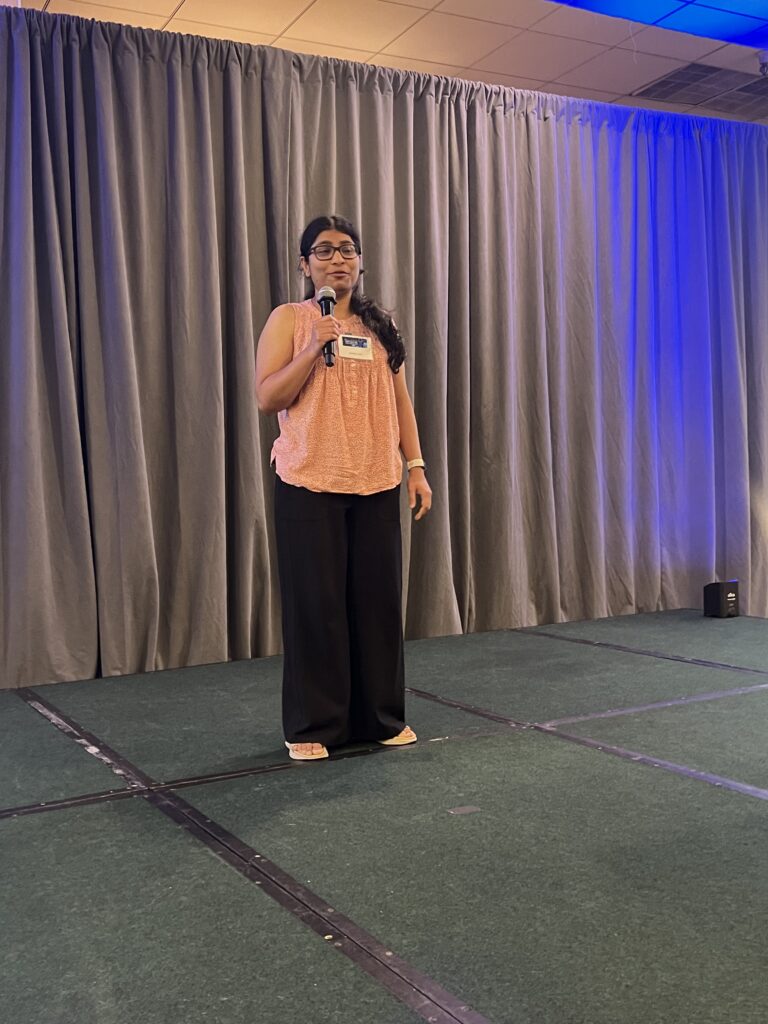
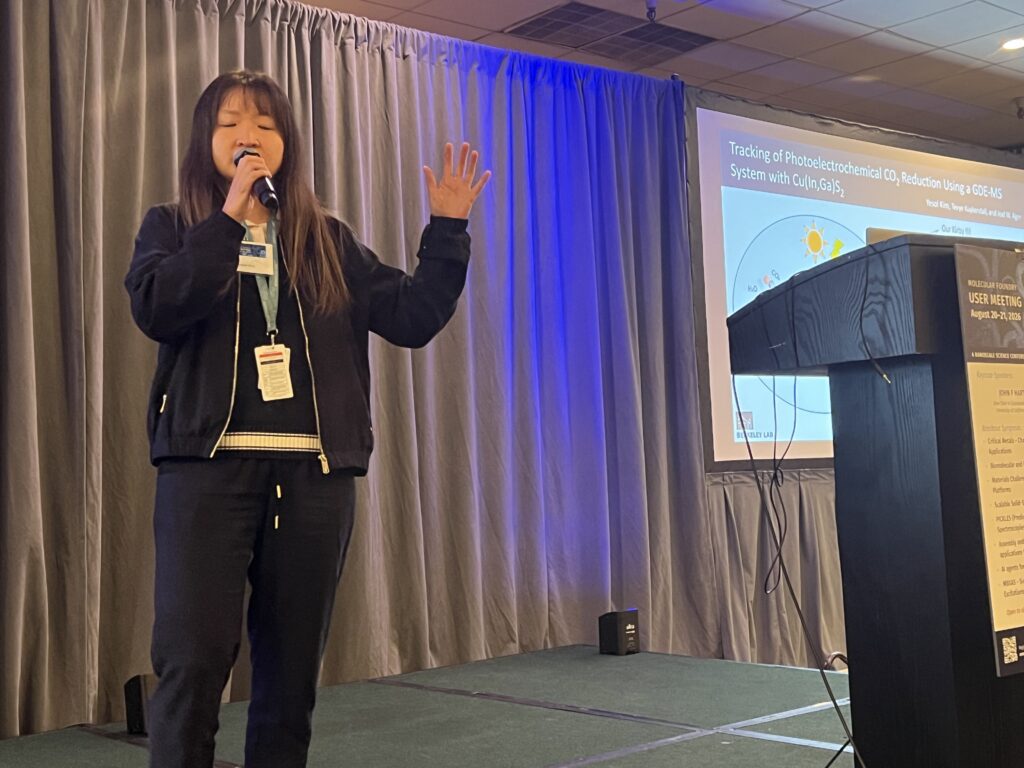
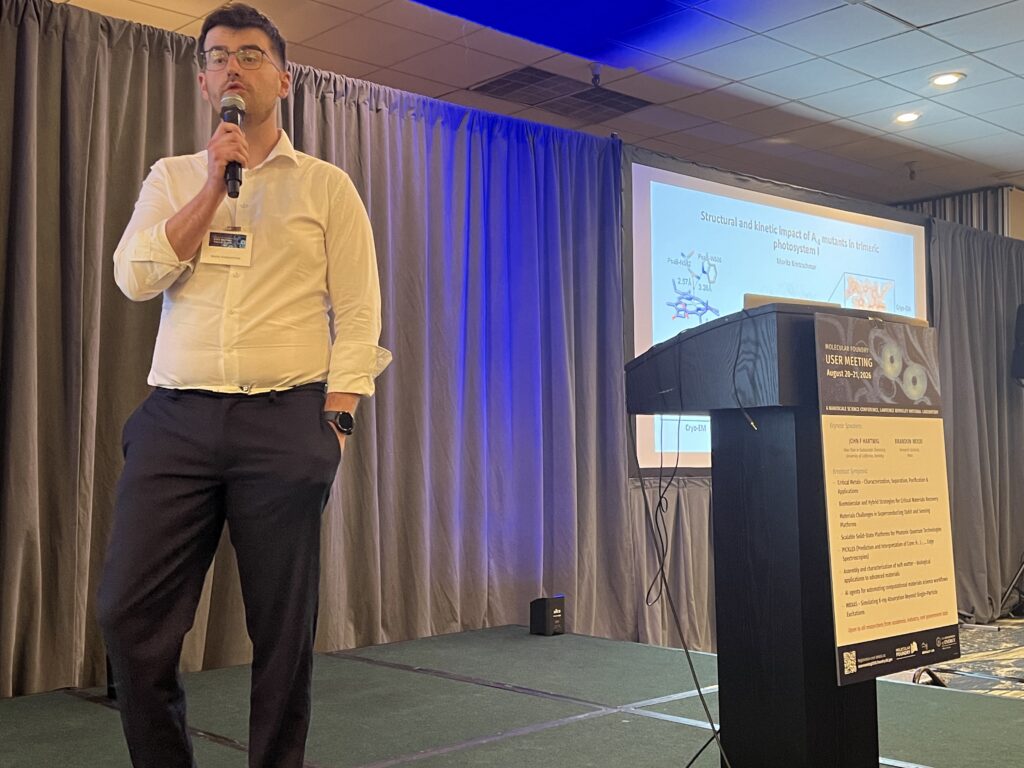
Thursday closed with the Poster Slam and Poster Session and reception, where nine participants competed in the slam ahead of the broader poster session, giving attendees a chance to dig into ongoing user research and network over the course of the evening.
Friday, August 21: Breakout Symposia and Workshops
Friday was devoted to breakout symposia and workshops, running in a morning block from 9:00 a.m. to 12:25 p.m. and an afternoon block from 1:25 to 4:50 p.m.
In the morning, the Critical Metals – Characterization, Separation, Purification & Applications symposium, organized by Daniel Sun and Dana Hernandez, brought together speakers from academia and industry against the backdrop of a historic wave of public and private investment in critical metals, driven by demand from energy technologies, defense, and the data centers powering AI. Talks ranged from mining co-products from existing industrial infrastructure (Peter Godart, Found Industries) and recovering critical medical isotopes from nuclear waste (Brooke Green, LBNL) to electrochemical copper extraction for domestic supply chains (Randy Allen, Still Bright), ion-channel-inspired polyamide membranes for ion recovery (Luis Francisco Villalobos, USC), battery waste upcycling with ligand-functionalized membranes (Michael Baird, Stanford), and impact assessment for critical mineral technology design (Rachel Woods-Robinson, University of Washington).
The Behavior and Characterization of Soft Matter symposium, organized by Preetika Rastogi, Paul Ashby, and Timothy Chiang, gathered researchers working on the synthesis, assembly, and characterization of proteins, polymers, surfactants, gels, and colloids, with applications spanning drug delivery, active matter, separations, and neuromorphic computing. Speakers included Joelle Frechette (UC Berkeley) on particle adsorption at fluid and lipid interfaces, Vinothan Manoharan (Harvard) on high-precision holographic microscopy of colloidal interactions, and Samanvaya Srivastava (UCLA) on block polycatechol materials.
The Scalable Solid-State Platforms for Photonic Quantum Technologies symposium, organized by Archana Raja, Erhan Saglamyurek, Harishankar Jayakumar, Mashnoon Sakib, and Ajit Dash, explored solid-state quantum emitters, including color centers in diamond, silicon, and silicon carbide, quantum dots, rare-earth ion dopants, and 2D-material emitters, as platforms for deterministic single-photon generation and quantum memory. Talks covered quantum networking testbeds (Inder Monga, LBNL), heterogeneous quantum interconnects (David Levonian, IonQ), rare-earth-ion nanophotonics (Andrei Faraon, Caltech), optically interconnected spin qubits in silicon photonics (Alp Sipahigil, UC Berkeley/LBNL), and integrated quantum photonics on thin-film lithium niobate (Mengjie Yu, UC Berkeley/LBNL), closing with a panel discussion on what it will take to scale photonic quantum technologies from materials to systems.
Also in the morning, the MBXAS workshop, led by David Prendergast and Adway Gupta, introduced attendees to the many-body X-ray absorption spectroscopy method developed at the Foundry to capture many-body physics in X-ray spectral simulations beyond single-particle approximations. The session combined theoretical background with hands-on installation, testing, and worked examples on both molecules and extended solids, plus a closing block where attendees could bring their own systems to try simulating.
In the afternoon, the Biomolecular and Hybrid Strategies for Critical Materials Recovery symposium, organized by Crysten Blaby-Haas, Behzad Rad, Setsuko Wakao, and Anne Glaesener, focused on bio-based and hybrid approaches to selective extraction and purification of critical materials, bridging fundamental science with the challenges of scale-up. Talks spanned automated screening for metalloprotein datasets (Patrick Diep, LLNL), metal-handling strategies in hyperaccumulator plants (Santiago Prochetto, Université libre de Bruxelles), chemical process modeling for hybrid recovery (Corinne Scown, LBNL), AI-guided media optimization for rare-earth bioaccumulation (Ning Sun, LBNL), and ferritin nanocages for selective metal recovery (Meng Wang, University of Houston).
The PICKLES workshop (Prediction and Interpretation of Core: K-, L-, … Edge Spectroscopies), organized by David Prendergast, Adway Gupta, and Fabrice Roncoroni, brought together experts using X-rays, electrons, and other probes to interpret core-level spectroscopies, with talks on the Bethe-Salpeter equation code OCEAN (John Vinson, NIST), computational X-ray photoelectron spectroscopy and AI agents (Jin Qian, LBNL), RIXS of nickelates via exact diagonalization (Emily Been, LBNL), and recent advances in many-body X-ray absorption spectroscopy (David Prendergast, LBNL).
The Materials Challenges in Superconducting Qubit and Sensing Platforms symposium, organized by Mythili Surendran, Aeron Tynes Hammack, and Yashwanth Balaji and sponsored by Rigetti Computing, examined the materials-level imperfections, including thin-film defects, interfacial disorder, two-level systems, and contamination, that limit coherence in superconducting qubits, resonators, and sensors. Talks included millisecond coherence times in 2D transmon qubits (Faranak Bahrami, Princeton), superconducting devices for quantum science and fundamental physics (Aritoki Suzuki, LBNL), the amorphous barrier in aluminum Josephson junctions (Paul Corbae, SLAC), and a historical perspective on superconducting devices for quantum computing from David Pappas of Rigetti Computing.
Rounding out the afternoon, the AI Agents for Automating Computational Materials Science Workflows workshop, organized by Archana Raja and Elizabeth Nowadnick, introduced attendees to multi-agent AI systems for orchestrating complex DFT workflows, with talks including a general machine learning framework for many-body interactions (Diana Qiu, Yale) and MatterChat, a multi-modal LLM for materials science (Yingheng Tang, LBNL), building up to a hands-on tutorial on TritonDFT, a new agentic AI platform that automates Quantum Espresso calculations. Users who preferred a more hands-on afternoon could instead join a tour of the Molecular Foundry itself.
Together, the two days reflected the full range of the Foundry’s user community, from fundamental physics and quantum materials to critical metals recovery and the growing role of AI and automation across every stage of the research pipeline. For full talk abstracts and the complete meeting schedule, visit the 2026 Annual User Meeting website.

