By Harkirat Batth
From everyday smartphones to electric vehicle battery packs, lithium powers much of modern life. Yet extracting lithium from natural brines remains a significant technical challenge. Lithium ions coexist in these brines alongside magnesium ions, which share similar chemical properties. Because of this similarity, separating the two using existing commercial technologies is often inefficient and time-consuming.
“Virtually every device you own or operate relies on technology powered, at least in part, by so-called critical materials,” said Jeff Urban, Inorganic Facility Director at the Department of Energy’s Molecular Foundry. “These are materials which are not very abundant in nature, and hard to purify and process — yet they possess unique properties that make them suitable for energy devices.”
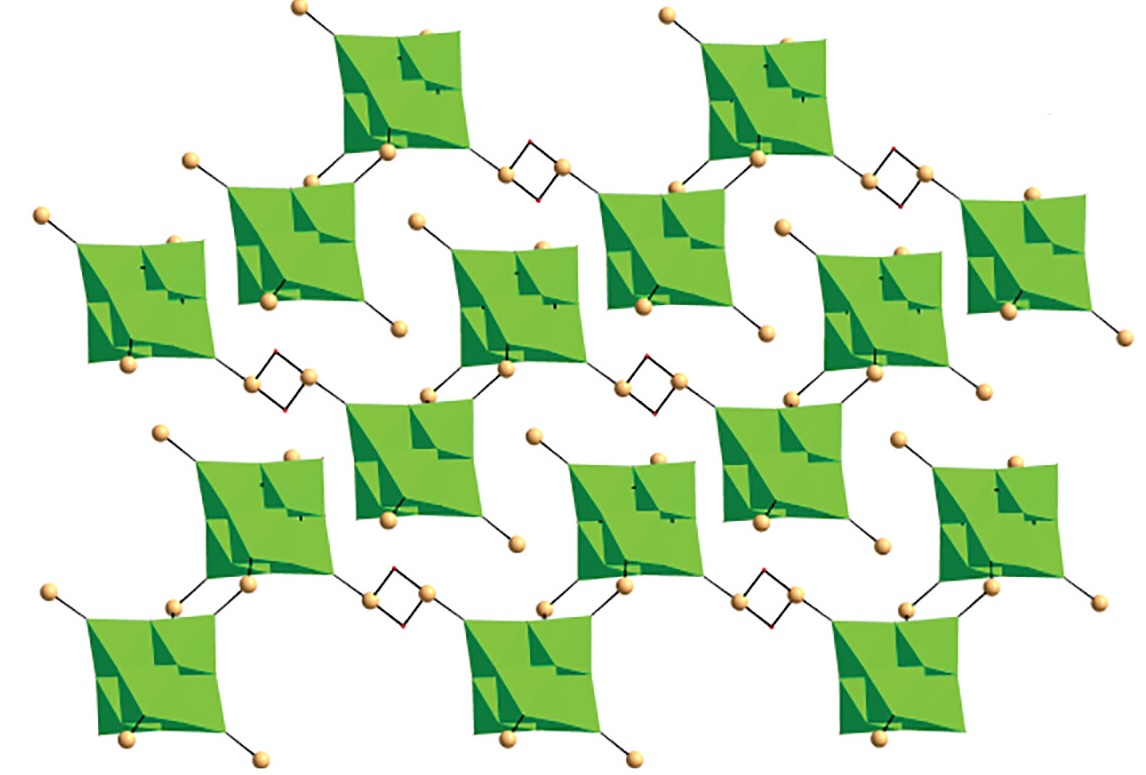
To tackle this separation bottleneck, a research team at the Molecular Foundry developed a polyoxoniobate (PONb) material that acts like a selective molecular sponge. When placed in a solution containing both ions, the PONb framework absorbs magnesium ions while leaving lithium ions in solution, enabling effective separation.
In a study published in Science Advances, the researchers demonstrated that the material removed 99.9% of magnesium ions from a test solution in under one minute, with minimal loss of lithium. Additionally, the sponge material can be reused, offering a potential path toward more sustainable processing cycles.
Interested in Becoming a Foundry User?
Join our collaborative, multidisciplinary environment.
Learn more >
“Li+ is very important since we use it in batteries every day, and its price has increased a lot in the past few years,” said Linfeng Chen, a postdoctoral researcher at the Molecular Foundry and co-lead author. “When we try to extract lithium from brine, the efficiency is usually not high enough, and purifying it costs a lot of money. We were trying to find a more efficient, low-cost method.”
Beyond improving efficiency, the approach offers a way to recover magnesium rather than treating it purely as waste.
“This all means we may be able to simplify one of the most challenging steps in lithium extraction,” said ChaoChao Dun, a researcher at the Molecular Foundry who helped oversee the project. “More broadly, this work shows how smart materials design can help address an important bottleneck in the clean energy supply chain. Another exciting aspect is that magnesium is not simply discarded in this process; it can also be recovered in a useful form.”
While these initial testing results were conducted in controlled laboratory environments, the team notes that the next stage of research will focus on testing the material against natural brine systems to evaluate how it performs under real-world processing conditions.

